 By
Family game night ideas include quick word, guessing, drawing, trivia, card, and active games that are easy to set up in the same room. Think about the players, the time available, and whether everyone feels like relaxing, creating, or moving around.
How to pick a game
First, look at who’s gathered, how long you want to play, and the feel of the room. Choose a game that suits the people and room, with rules simple enough to share quickly.
Consider the supplies already nearby. For almost no setup, try a word game or a guessing game. Paper, pencils, a deck of cards, or a soft household item can open up more choices.
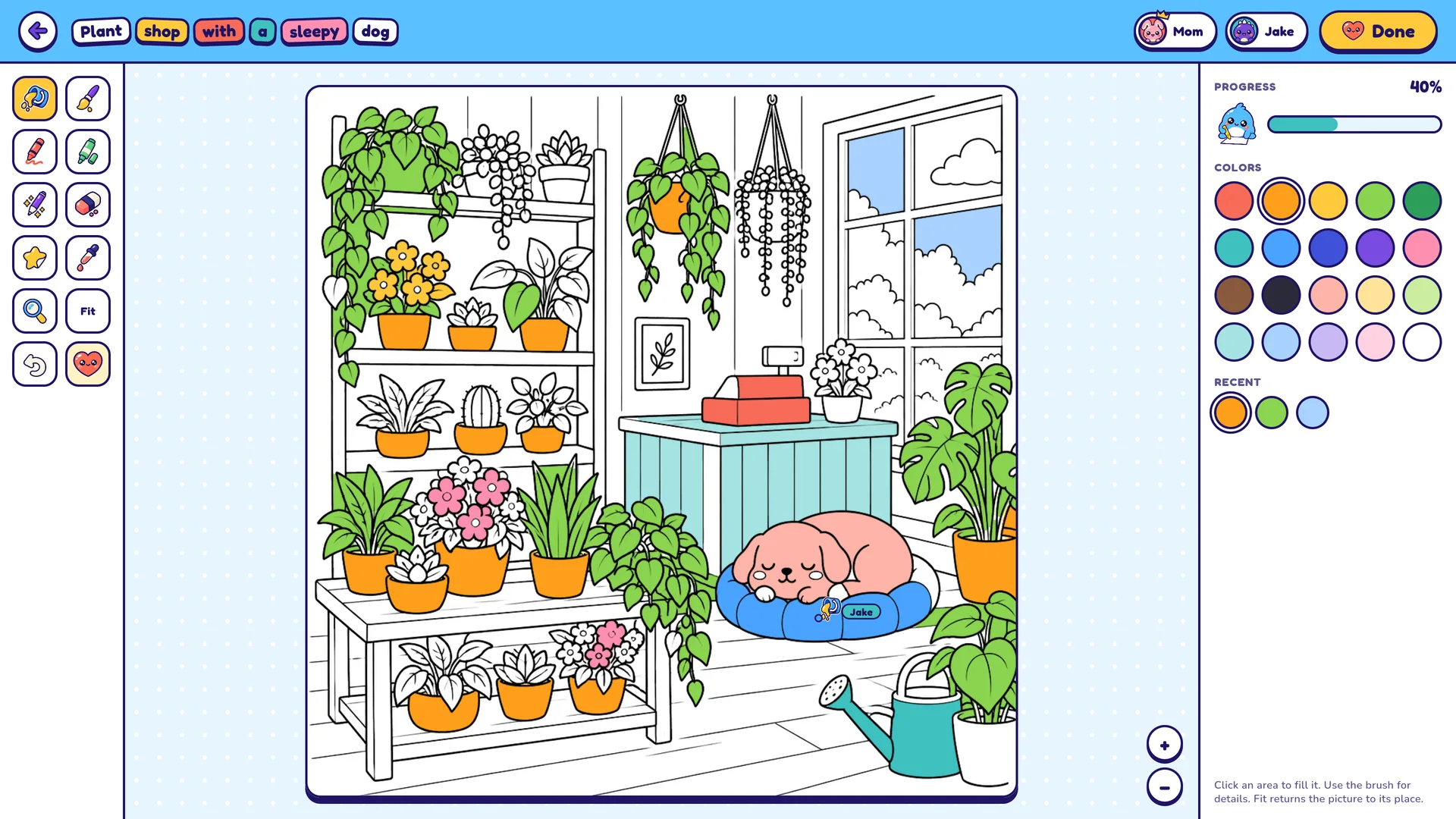
If a relative is joining by call, choose a game where everyone can hear the clues and take turns. Keep the phone where the group can see it, and make it easy for anyone to pass. A relative far away can also color the same picture with you online, live.
Quick-start games with little or no equipment
1. Guess the hidden object
Hide an everyday object under a cloth, then let the group ask yes-or-no questions to work out what it is. Keep the object nearby so you can swap it for another round. It’s an easy opener because everyone can join in without needing to read or write.

2. Name something in the category
Choose a category, such as foods, places, or things in the room, and take turns naming something that fits. Anyone can pass, and you can start a fresh category when the group runs out of ideas. You don’t need supplies, so it works well while people settle in.
3. Whisper down the line
Sit in a row or a circle. The first person whispers a short sentence to their neighbor, and each person whispers it on to the next. The last person says out loud what they heard, then the first person shares the original sentence. Start a new round with a new sentence from someone else. You need no supplies, and the funny mix-ups are the best part.
4. Copy the clapping pattern
One person claps a short pattern, and everyone else tries to copy it. Add another clap to the pattern each round, and start again if anyone loses track. It’s a relaxed choice when you want to play while seated and don’t want to set anything up.
5. Remember the tray
Place six small household items on a tray and give everyone a moment to look at them. Cover the tray, then take turns naming what was there. It’s a simple memory challenge, and you can change the objects to make a new round.
6. Line up without talking
Ask everyone to stand in a line in order of birthday month, with no talking allowed. People can use hand signals, nods, or fingers to show numbers. When the group thinks it's done, go down the line and say each month out loud to check. You can try again with a new order, like height or how far away everyone lives.
Word, guessing, and storytelling games
7. Pack a suitcase from A to Z
The first person says, "I'm packing a suitcase, and I'm bringing an apple." The next person repeats that and adds something starting with B, and so on through the alphabet. When an item slips from someone’s mind, let the group supply it. Nothing to set up, and you can start over with a new trip, like a beach day or a camping weekend.
8. Describe it without the key word
Write familiar words on slips of paper and put them in a bowl. A player picks one and describes it without saying the word, while the others guess. Keep the words easy to explain so the game stays lively and no one needs special knowledge.
9. Keep the rhyme going
Say a word aloud, then take turns adding a word that rhymes with it. When the group gets stuck, pick a new starting word and carry on. There’s nothing to set out, and players can take their time instead of racing the clock.
10. Give three clues
Think of a familiar person, place, or object and offer three clues for the group to guess. Start with a broad clue and make each one more specific. It’s easy to fit in a short gap, and you can choose a new answer for each round.
11. Guess the family memory
Someone shares a light family memory, then the group guesses who was there or where it happened. Choose a story everyone will feel comfortable hearing, and let the storyteller give another clue if needed. It can bring a personal touch to a gathering without needing any materials.
12. Invent a new holiday
Go around the room and let each person add one piece of a made-up holiday: its name, a special food, a silly tradition, a decoration. Keep going until the holiday feels complete, then vote on the best tradition. Anyone can pass, and you only need your imaginations.
Drawing, acting, and creative games
13. Draw with your eyes closed
Give everyone a sheet of paper and a pencil, then name something simple to draw, like a house, a cat, or a bicycle. Everyone closes their eyes and draws it. Open your eyes, hold up the drawings, and let the group pick the funniest one. It's a good laugh, and nobody needs to be able to draw.

14. Draw a map from memory
Pick a place that several people know, like a grandparent's old kitchen or a favorite park. Everyone draws a quick map of it from memory on their own sheet. Then lay the maps side by side and talk about what each person remembered differently. All you need is paper and pencils.
15. Make a folded drawing
Fold a sheet of paper into sections so each person can draw one part without seeing what came before. Pass the paper along, then unfold it together to see the whole picture. It works well for a group that likes a little surprise and doesn’t mind a wobbly result.
16. Invent a silly gadget
Give everyone paper and a pencil, then name an everyday problem, like a messy table or a lost sock. Each person draws a silly gadget that solves it, then shows it to the group and explains how it works. When everyone has shared, vote on the most useful gadget, or just pick your favorite. All you need is paper and pencils.
17. Turn a hand into a creature
Give everyone a sheet of paper and a pencil. Each person traces their own hand, then adds eyes, legs, feathers, or whatever turns it into a creature. Take turns holding up your creature and giving it a name. When everyone has shown theirs, the group picks a favorite. All you need is paper and pencils.
18. Draw a familiar object from memory
Choose an object in the room, look at it briefly, then hide it from view and draw what you remember. When everyone is ready, bring the object back and compare the pictures. Paper and pencils are all you need, and the fun is in noticing what each person remembered.
Card and trivia games
19. Find matching cards
Choose matching pairs from a deck, shuffle them, and place the cards face down. Players take turns turning over two cards to find a pair, then return unmatched cards to their places. It’s easy to explain and gives everyone a reason to pay attention to each turn.
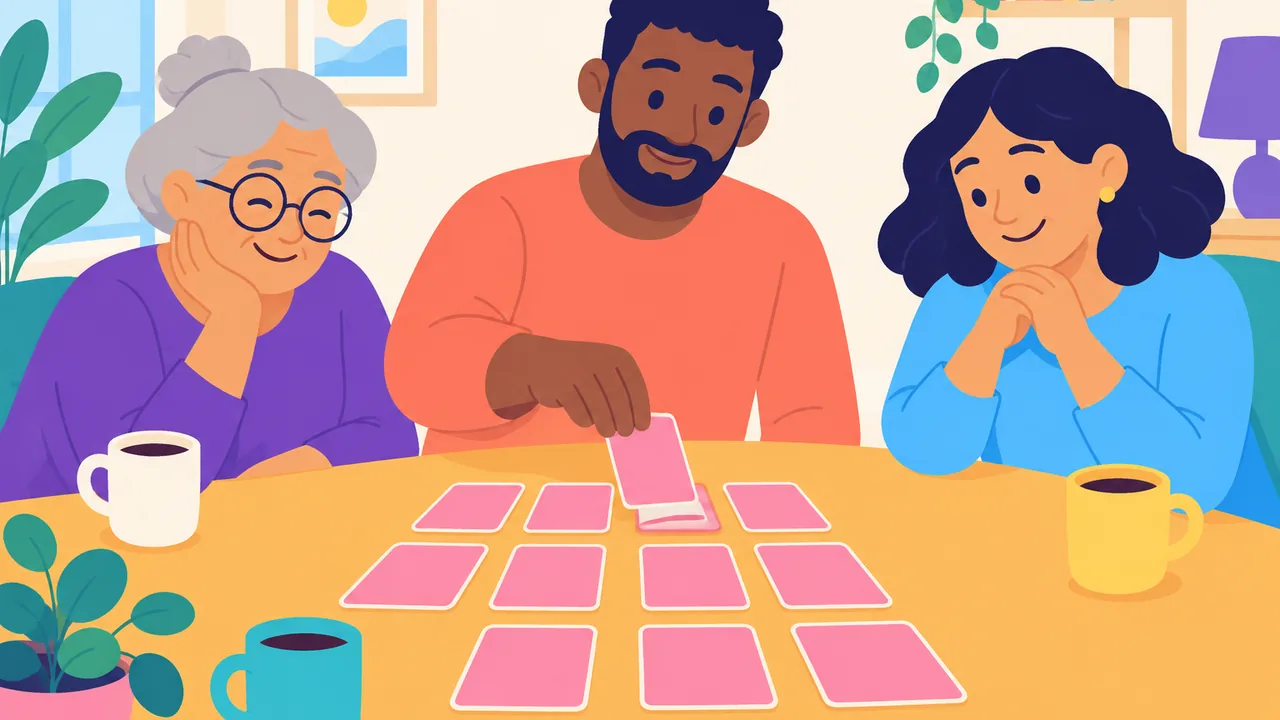
20. Build a card sequence together
Use number cards from a deck and take turns adding the next card in a sequence. Agree on a simple pattern first, such as counting upward, and lay each card in a row as you go. If someone isn't sure which card fits, the group can help. The round ends when the row reaches the top number or the cards run out. This is a cooperative game, so the focus stays on solving the pattern together rather than beating another player.
21. Guess whose item it is
Have everyone drop one small item from a pocket or purse into a bag, with nobody watching. One person pulls the items out one at a time, and the group guesses who each belongs to. The owner can share a quick story about it. Let people pick a different item if they'd rather not use their first choice.
22. Guess how many are in the jar
Fill a clear jar with dried beans, pasta, or coins. Everyone writes a guess on a slip of paper and folds it. Count the contents together, then read the guesses out loud. The closest guess wins. You need a jar, something to fill it with, and paper and pencils.
23. Quiz the group on a photo
Choose a familiar photo and show it briefly. Hide it, then ask what people remember seeing, such as the colors, objects, or where someone was standing. It’s a quick activity that turns a photo the group already knows into a guessing round.
24. Talk for 30 seconds
Write easy topics on slips of paper, like a favorite meal or a trip you'd take again. Each person draws a slip and talks about it for 30 seconds while someone watches the time on a phone. Nobody has to win. Let anyone swap their slip for another one if the topic doesn't suit them.
Active games and games for a relative on a call
25. Keep a balloon in the air
Use one balloon and work together to stop it from touching the floor. Play seated or standing, and clear enough space to move safely before you begin. The shared goal makes it easy to cheer each other on without keeping score.

26. Stand up if...
One person says something like "Stand up if you've ever been to the ocean" or "Stand up if you had cereal today." Everyone it fits stands, then sits back down. Take turns calling the next one. It gets everyone moving a little and learning small things about each other, and you need no supplies.
27. Walk with a book on your head
Each player balances a paperback book on their head and walks across the room and back. If it falls, pick it up and keep going from where you are. Cheer each other on, or time each turn on a phone. All you need is a book and a clear path.
28. Copy the leader’s movements
One person makes slow, simple movements while the rest of the group mirrors them. After a short turn, pass the lead to someone else. You can play seated or standing, so it’s easy to fit the activity to the room and the group.
29. Pass the funny face
Sit in a circle. The first person turns to their neighbor and makes a funny face. The neighbor copies it as closely as they can, then turns to the next person with a new face. Keep it going around the circle. You need no supplies, and anyone can pass.
30. Let the caller give a clue
A relative joining by call gives a spoken clue, and the people in the room take turns guessing the answer. Pick a familiar object or topic, and make sure everyone can hear the clue before guesses begin. It gives the caller a clear part to play without needing to see every detail. For more ways to play together, see these family games online.
Keep game night easy and relaxed
Let everyone settle into a pace that feels right, and enjoy the time together instead of trying to finish every game.
- For a short night, pick a quick opener and one game the group wants to play longer. Keep another idea ready in case plans change.
- Explain the rules in a few sentences, then try a practice round before keeping score.
- Set out paper, cards, and other supplies before people arrive. Keep snacks and drinks within easy reach.
- Invite younger players, teens, and grown-ups to suggest a game, lead a round, or help keep score. Offer a team version, a shared goal, or the option to pass.
- If a game feels slow or confusing, stop and switch without making anyone finish the round.
- If a relative joins by call, place the phone where they can see and hear the group, and have someone repeat any visual clues.
Questions and answers
How do you plan a family game night?
Choose a few games that fit the group’s time, interests, and space. Set out simple supplies, explain that anyone can pass, and switch games if the group loses interest.
What are some family games to play?
Try a mix of quick word games, guessing, drawing, trivia, cards, and active games, then keep the ones your group enjoys.
What are some fun games for two people?
Try giving three clues, packing a suitcase from A to Z, inventing a new holiday, or finding matching cards.